
Vision Analysis
This eval tests whether the model can use an image-analysis capability as evidence for a domain-oriented answer. It uses a fixed industrial control-panel image and a deterministic simulated service, so the evaluation does not call an external vision model or depend on changing model output.
Test inputs
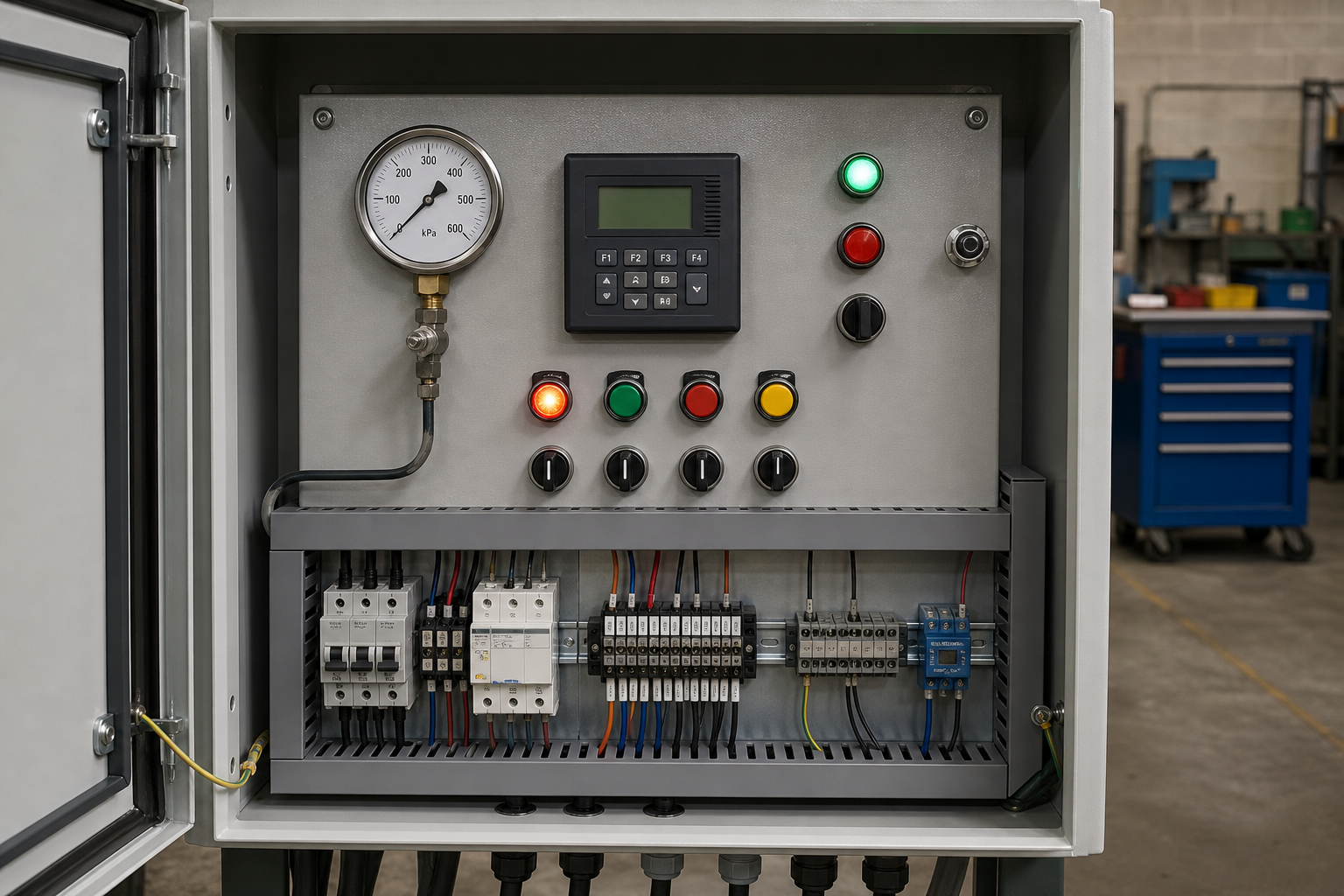
The spec defines the simulated analysis endpoint. Its response contains components, visible state, confidence, uncertain observations, and suggested follow-up checks. It does not contain the final maintenance answer.
Add the Integration to Bionic
Download the OpenAPI spec, then go to the admin area in Bionic. Open OpenAPI Specs, add a new spec, and paste or upload the vision-analysis YAML.
Return to the app, open Integrations, add an integration, and choose the image-analysis spec. The default lab includes the eval-mocks service used by the integration.
Test Prompt
Upload control-panel.png to the chat and try:
You are a maintenance engineer. Inspect the uploaded image. Identify the
major components, describe any visible operating state, and flag anything
that may warrant closer inspection. Clearly distinguish observations from
assumptions.
Expected behavior
- Discover and read the
image-analysisskill. - Identify that the uploaded image requires image analysis.
- Read the image-analysis function documentation.
- Call the simulated vision function with the uploaded image reference and an appropriate task.
- Separate observed components and visible state from uncertain conclusions.
- Produce a concise maintenance-oriented interpretation rather than dumping the raw JSON.
- Recommend follow-up checks without inventing a fault diagnosis.
The answer should not claim an exact gauge reading, a specific controlled process, pump failure, overpressure, or an electrical fault. Those conclusions are not supported by the deterministic analysis.
What to evaluate
The eval passes when the model uses the image, calls the correct function, preserves uncertainty, and adapts the structured evidence to the maintenance context. It fails when the model ignores the image, skips the tool, invents unsupported readings or faults, or simply repeats the response JSON.