
Course Introduction
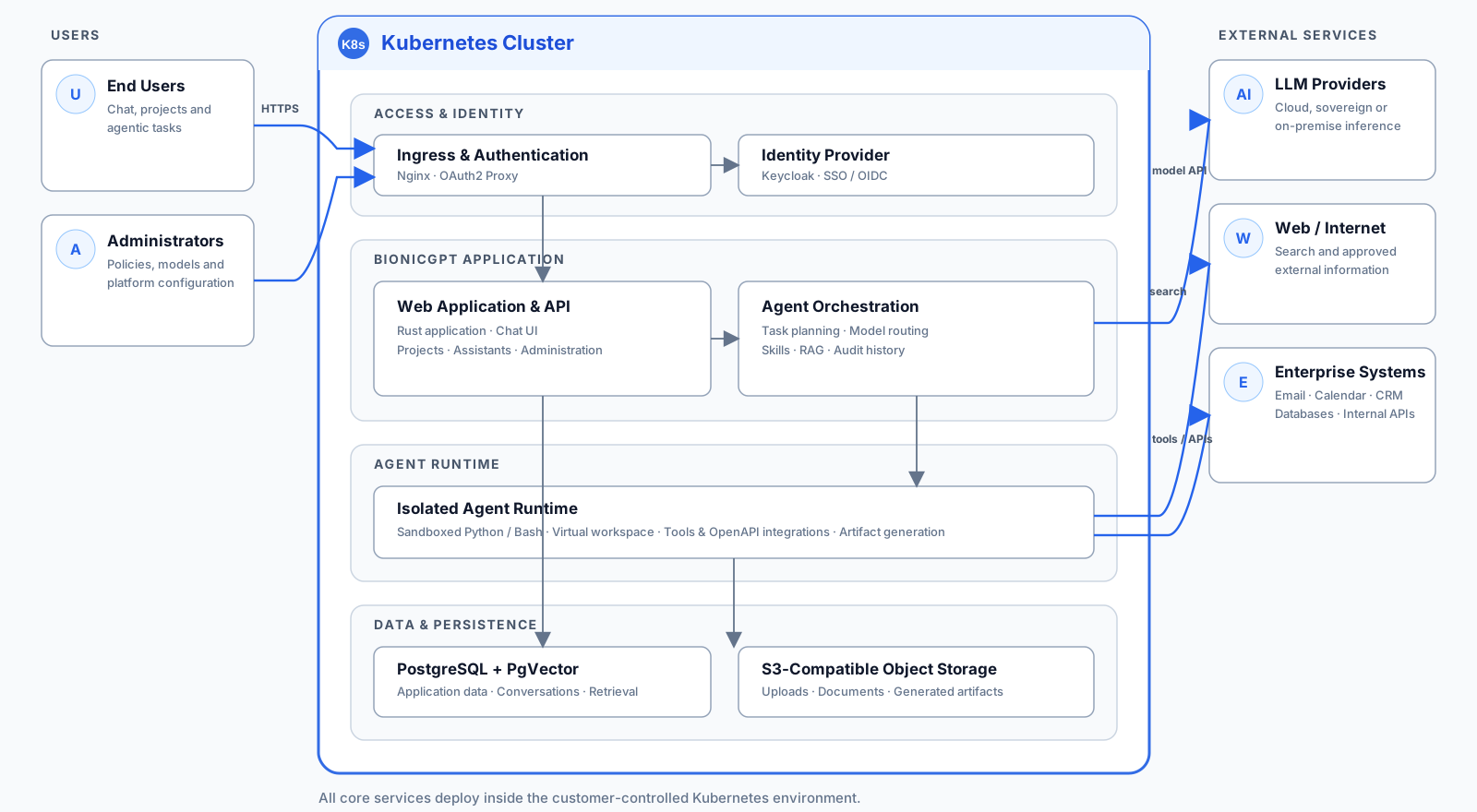
By the end of this course, you will understand how agentic AI systems combine models, tools, integrations, sandboxes, skills, memory, retrieval, and human review into a working enterprise AI platform.
The evals are designed to help teams compare models, prompts, tools, and deployment patterns before committing to a production design. They can support decisions about which models are suitable for on-premise, private-cloud, or approved hosted environments, while also teaching the practical details of agentic AI that are easy to miss in abstract architecture discussions.
Enterprise Evals
Enterprise evals use controlled mock services, fixed source data, and known expected outcomes. That lets you test tool use, reasoning, retrieval, permissions, and artifact generation without relying on live enterprise systems.
As the course grows, each eval can stand on its own with its own prompt, tools, data, and success criteria.
Course outline
- Set up the workspace: run the platform, connect an API provider or Ollama, and test the platform.
- Understand actions: learn about tool calls and the agentic loop.
- Create a working environment: combine sandboxes, a virtual file system, and runtime tools.
- Make work reusable: add skills, memory, and scheduled tasks.
- Run enterprise evals: start with AutomationBench, then test inbox summarization and a deep research, test persistent state, then try document co-authoring and vision analysis.
- Operate safely: understand why Kubernetes and run the Kubernetes lab.